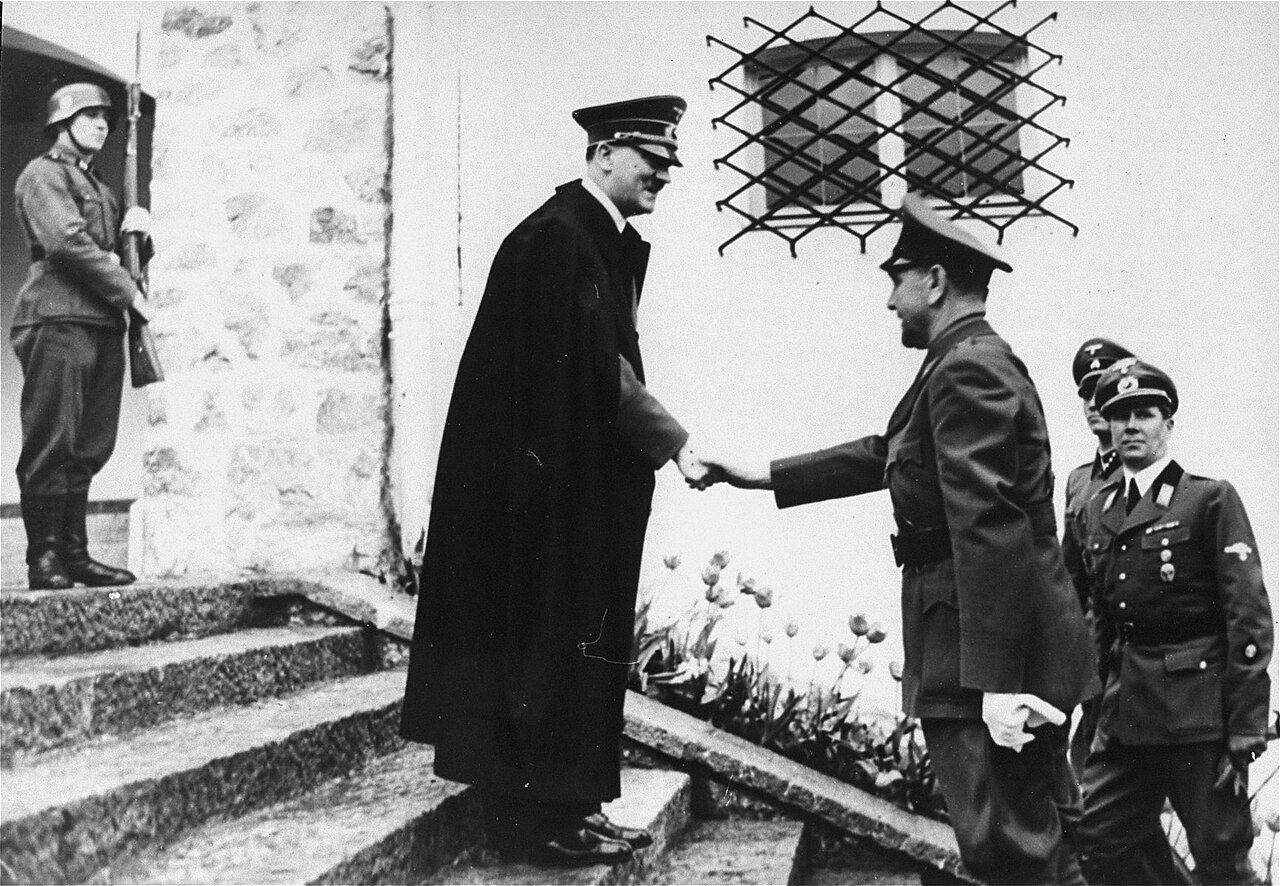
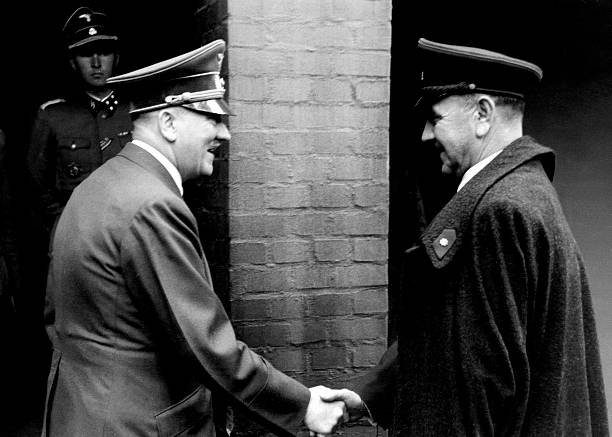
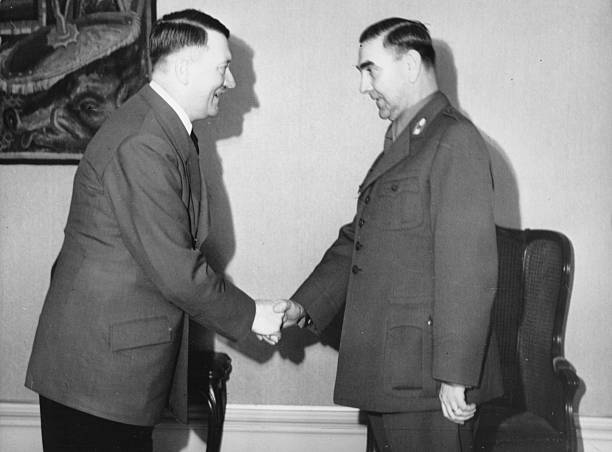
Ante Pavelić
Founder of the Ustaše and dictator of the Independent State of Croatia.

Unknown author · Public domain
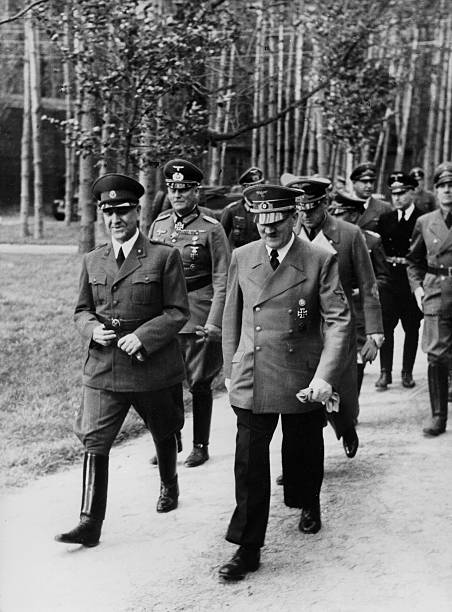
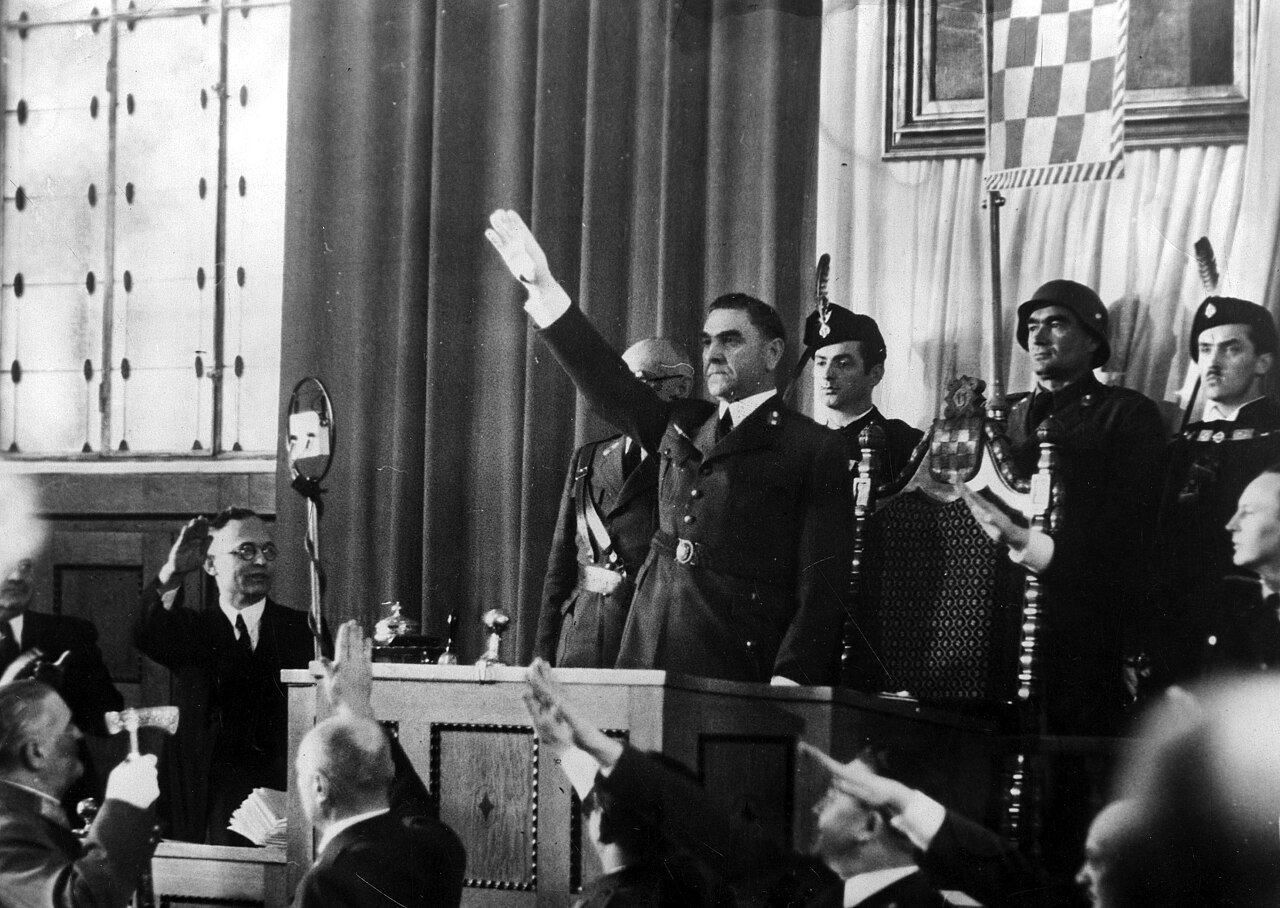
Ante Pavelić was a Croatian politician who founded and headed the Ustaše in 1929 and was dictator of the Independent State of Croatia (NDH), a fascist puppet state built out of parts of occupied Yugoslavia by the authorities of Nazi Germany and Fascist Italy, from 1941 to 1945. Pavelić and the Ustaše persecuted many racial minorities and political opponents in the NDH during the war, including Serbs, Jews, Romani, and Yugoslav Partisans, becoming one of the key figures of the genocide of Serbs, the Porajmos and the Holocaust in the NDH.
- born
- 14 July 1889
- died
- 28 December 1959
- nationality
- Croatian
- known_for
- Founding the Ustaše; dictator of the Independent State of Croatia; involvement i
Verified Timeline
Lore & Background
Ante Pavelić was born on 14 July 1889 in the Herzegovinian village of Bradina on the slopes of Ivan Mountain north of Konjic, then part of the Ottoman Empire occupied by the Austro-Hungarian Empire. His parents had moved to Bosnia and Herzegovina from the village of Krivi Put in the central part of the Velebit plain, in southern Lika, to work on the Sarajevo-Metković railway line. Searching for work, his family moved to the village of Jezero outside Jajce, where Pavelić attended primary school, or maktab. Here Pavelić learned Muslim traditions and lessons that influenced his attitude towards Bosnia and its Muslims. Pavelić's sense of Croat nationalism grew from a visit to Lika with his parents, where he heard townspeople speaking Croatian, and realised it was not just the language of peasants. While attending school in Travnik he became an adherent of the nationalist ideologies of Ante Starčević and his successor as the leader of the Party of Rights, Josip Frank. Health problems briefly interrupted his education in 1905. In summer he found work on the railway in Sarajevo and Višegrad. He continued his education in Zagreb, the home city of his elder brother Josip. In Zagreb, Pavelić attended high school. His failure to complete his fourth-year classes meant he had to retake the exam. Early in his high school days, he joined the Croatian Party of Rights as well as the Frankovci students' organization, founded by Josip Frank, the father-in-law of Slavko Kvaternik, an Austro-Hungarian colonel. Later he attended high school in Senj at the classical gymnasium, where he completed his fifth-year classes. Health problems again interrupted his education, and he took a job on the road in Istria, near Buzet. In 1909 he finished his sixth-year classes in Karlovac. His seventh-year classes were completed in Senj. Pavelić graduated in Zagreb in 1910 and entered the Law Faculty of the University of Zagreb. In 1912 Pavelić was arrested on suspicion of involvement in the attempted assassination of the Ban of Croatia-Slavonia, Slavko Cuvaj. He completed his law degree in 1914 and obtained his doctorate in July 1915. From 1915 until 1918 he worked as a clerk in the office of Aleksandar Horvat, president of the Party of Rights. After completing his clerkship, he became a lawyer in Zagreb. During World War I, Pavelić played an active role in the Croatian Party of Rights. As an employee and friend of its leader Horvat, he often attended important party meetings, taking over Horvat's duties when he was absent. In 1918, Pavelić entered the party leadership and its Business Committee. After the unification of the State of Slovenes, Croats and Serbs with the Kingdom of Serbia on 1 December 1918, the Party of Rights held a day of public protest claiming that the Croatian people were against having a Serbian king, and that their highest state authorities had not agreed to unification. Further, the party expressed their wish for a Croatian republic in a program from March 1919, signed by president of the party, Vladimir Prebeg and Pavelić. At the 1921 local elections in Zagreb, Pavelić was elected member of the city assembly. In the name of the party, he contacted Nikola Pašić, the Yugoslav Prime Minister and member of the People's Radical Party, with the goal of weakening the Croatian Peasant Party (HSS), the dominant Croatian party in the interwar period. Pavelić was a member of the Frankovci faction of the Party of Rights. Ivica Peršić, a Croatian politician from the competing Milinovci faction, wrote in his memoir how Pavelić's 1921 election significantly raised the standing of his law office in Zagreb – a number of rich Jewish clients paid him to obtain Yugoslav citizenship, and Pavelić subsequently started to make frequent visits to Belgrade, where he would procure those documents through his increasing number of connections to the members of the ruling People's Radical Party. In 1921, 14 Party of Rights members, including Pavelić, Ivo Pilar and Milan Šufflay, were arrested for anti-Yugoslav activities, for their alleged contacts with the Croatian Committee, a Croatian nationalist organization that was based in Hungary at the time. Pavelić acted as the defence lawyer at the subsequent trial and was released. On 12 August 1922, in St. Mark's Church, Zagreb, Pavelić married Maria Lovrenčević. They had three children, daughters Višnja and Mirjana and son Velimir. Later Pavelić became vice-president of the Croatian Bar Association, the professional body representing Croatian lawyers. In his speeches to the Yugoslav Parliament he opposed Serbian nationalism and spoke in favor of Croatian independence. He was active with the youth of the Croatian Party of Rights and began contributing to the Starčević and Kvaternik newspapers. Serbian members of the Yugoslav Parliament disliked him and when a Serbian member said "Good night" to him in parliament, Pavelić responded: "Gentleman, I will be euphoric when I will be able to say to you 'good night'. I will be happy when all Croats can say 'good night' and thank you, for this 'party' we had here with you. I think that you will all be happy when you don't have Croats here any more." In 1927, Pavelić became the vice president of the party. In June 1927, Pavelić represented Zagreb County at the European Congress of Cities in Paris. When he was returning from Paris, he visited Rome and submitted a memorandum.
Reader's Guide
Ante Pavelić's significance lies in his role as the founder and leader of the Ustaše, a Croatian nationalist movement with the goal of creating an independent Croatia by any means, including the use of terror. Calling himself the Poglavnik, or supreme leader, Pavelić returned from Italy and took control of the puppet government of the Independent State of Croatia (NDH) on 10 April 1941. He created a political system similar to that of Fascist Italy and Nazi Germany. The NDH, though constituting a Greater Croatia, was forced by the Italians to relinquish several territorial concessions to the latter. After taking control, Pavelić imposed largely anti-Serbian, anti-Semitic and anti-Roma policies that resulted in the deaths of hundreds of thousands of Serbs, and tens of thousands of Jews and Roma in the NDH, many of which in dedicated concentration and extermination camps run by the Ustaše. Under the NDH regime, hundreds of thousands of Orthodox Christians were also forcibly converted to Catholicism, or expelled to German-occupied Serbia. These mass killings and persecutions have been described as the 'single most disastrous episode in Yugoslav history'. In 1945, Pavelić ordered the executions of prominent NDH politicians Mladen Lorković and Ante Vokić on charges of treason when they were arrested for plotting to oust him and align the NDH with the Allies. Following the surrender of Germany that May, Pavelić ordered his troops to keep fighting even after the surrender. He subsequently ordered the NDH to flee to Austria to offer the surrender of their armed forces to the advancing British Army, which refused to accept it, and directed them to surrender to the Yugoslav Partisans instead. Sparked by attacks on their position, the Partisans began carrying out mass killings of surrendered Axis forces and their alleged collaborators, in which tens of thousands perished. Pavelić fled to Austria before obtaining a false passport from the Vatican and escaping to Argentina, where he continued to engage in fascist activities. He later served as a security advisor to Juan Perón, the President of Argentina, who provided sanctuary for many fascist war criminals. On 10 April 1957, Pavelić was shot in an assassination attempt in Buenos Aires. The shooting and subsequent hospitalization caused him unwelcome public attention; fearing arrest and extradition to Yugoslavia, he fled to Francoist Spain, where he would be granted political asylum. He spent two and a half years in Spain before dying in Madrid from complications of the gunshot wounds on 28 December 1959, aged 70.
Did You Know?
- Pavelić was sentenced to death in absentia twice: once by Yugoslav authorities after plotting with IMRO, and again in France after the assassination of King Alexander in 1934.
- On 12 August 1922, Pavelić married Maria Lovrenčević in St. Mark's Church, Zagreb; they had three children: Višnja, Mirjana, and Velimir.
- In 1921, Pavelić was arrested for anti-Yugoslav activities alongside Ivo Pilar and Milan Šufflay, but acted as his own defence lawyer and was released.
- Pavelić obtained a false passport from the Vatican to escape to Argentina after World War II.
- He was shot in an assassination attempt in Buenos Aires on 10 April 1957, and died from complications of those wounds in Madrid on 28 December 1959.
From Lawyer to Terrorist Leader
Pavelić entered public life as a lawyer and a member of the Croatian Party of Rights within the Kingdom of Yugoslavia, where he championed Croatian independence and nationalist causes. By the late 1920s, however, his rhetoric hardened dramatically. He openly urged Croats to rise up against the Yugoslav state and even explored the possibility of an Italian protectorate over Croatia. When King Alexander I imposed his January 1929 dictatorship and dissolved all political parties, Pavelić left the country and began collaborating with the Internal Macedonian Revolutionary Organization to destabilize Yugoslavia. The Yugoslav government responded by trying him in absentia and handing down a death sentence. In Fascist Italy, he established the Ustaše, a Croatian nationalist movement whose stated aim was to create an independent Croatia by any means, explicitly including terror. The group carried out train bombings, assassinations, and a small armed uprising in Lika in 1932. The movement's most notorious act came in 1934, when, in coordination with the IMRO, the assassination of King Alexander was carried out. Pavelić was again sentenced to death, this time by a French court in absentia, and was imprisoned by the Italians for eighteen months under international pressure.
The Poglavnik and the Genocidal State
In April 1941, at the behest of the German authorities, senior Ustaša Slavko Kvaternik proclaimed the creation of the Independent State of Croatia in Pavelić's name. Pavelić returned from Italy, styled himself the Poglavnik, or supreme leader, and seized control of the new puppet government. He modeled the political structure on the fascist systems of Italy and Germany. Although the NDH was framed as a Greater Croatia, Italian authorities compelled it to cede several territories. Once in power, Pavelić enacted sweeping anti-Serbian, anti-Semitic, and anti-Roma legislation. The consequences were catastrophic: hundreds of thousands of Serbs and tens of thousands of Jews and Roma were killed, many in dedicated concentration and extermination camps operated by the Ustaše. Additionally, hundreds of thousands of Orthodox Christians faced forced conversion to Catholicism or expulsion into German-occupied Serbia. These campaigns of mass murder and persecution have been described as the most catastrophic episode in Yugoslav history, making Pavelić one of the central figures behind the genocide of Serbs, the Porajmos, and the Holocaust within the NDH.
Collapse, Betrayal, and the Flight
By 1945, Pavelić's grip on power was fracturing. When prominent NDH politicians Mladen Lorković and Ante Vokić were arrested for plotting to remove him and pivot the state toward the Allies, he ordered their execution on charges of treason. After Germany's surrender that May, Pavelić commanded his troops to continue fighting rather than lay down arms. He then directed the NDH forces to retreat into Austria to offer their surrender to the advancing British Army. The British refused to accept the surrender and instead instructed the Axis troops to hand themselves over to the Yugoslav Partisans. What followed was a tragedy of staggering scale: provoked by attacks on their positions, the Partisans carried out mass killings of the surrendered Axis soldiers and their alleged collaborators, in which tens of thousands lost their lives. Pavelić himself slipped away to Austria before securing a false passport through the Vatican and escaping to Argentina, where he would spend the remainder of his life in exile.
Exile, Assassination Attempt, and Death
In Argentina, Pavelić did not retreat into obscurity. He continued to engage in fascist political activities and even served as a security advisor to President Juan Perón, who was known for granting sanctuary to numerous fascist war criminals fleeing Europe. On 10 April 1957, Pavelić was shot in an assassination attempt in Buenos Aires. The shooting and his subsequent hospitalization drew unwelcome public attention to his presence in the country. Fearing arrest and extradition to Yugoslavia, he fled to Francoist Spain, where political asylum was granted to him. He spent the final two and a half years of his life in Spain. On 28 December 1959, Pavelić died in Madrid, aged seventy, from complications arising from the gunshot wounds he had sustained nearly three years earlier in Argentina. His death thus came not from a trial, a court sentence, or a political reckoning, but from the lingering physical consequences of an attempt on his life in exile.
Gallery

More in Political Leaders & Revolutionaries 1-24
Related in Political Leaders & Revolutionaries
Links follow this subject's own source article.
Elsewhere in the Political Leaders & Revolutionaries universe
Spotted an error? Know more?
This is a living reference — every entry is fact-audited, and reader corrections feed straight into our audit queue. Suggest an edit · See this site's audit record