
Elizabeth Cady Stanton
Leader of the U.S. women's rights movement.

Schlesinger Library on the History of Women in America · No restrictions
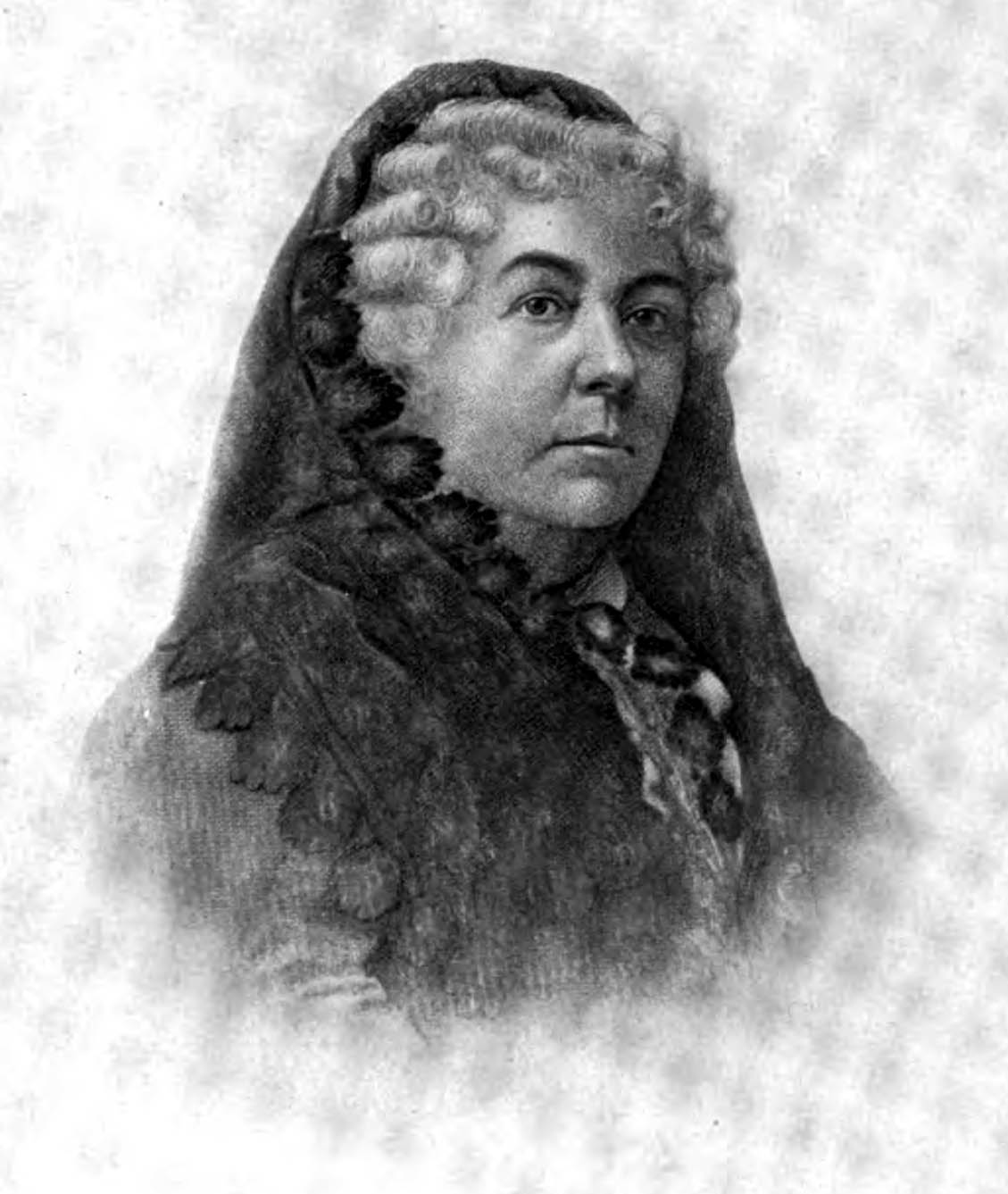
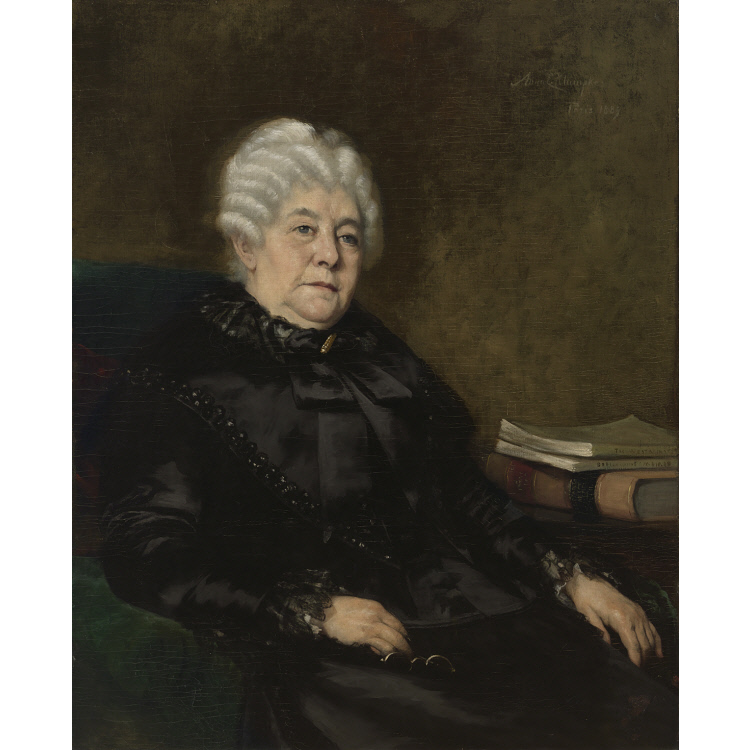
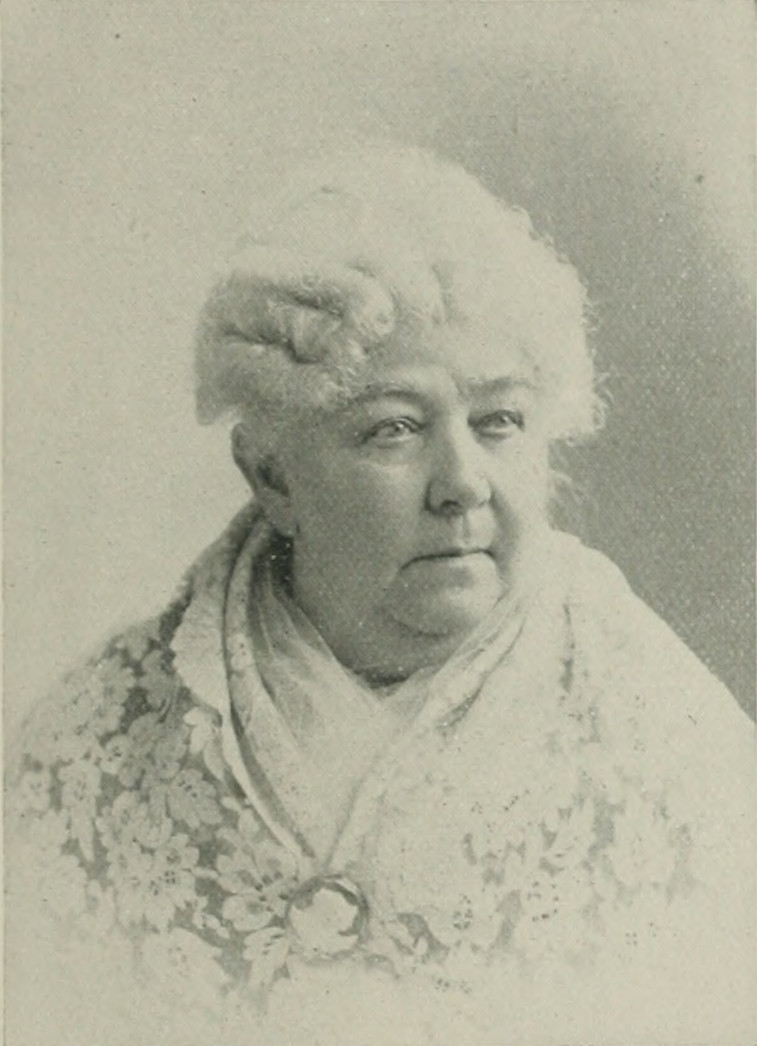
Elizabeth Cady Stanton (née Cady; November 12, 1815 – October 26, 1902) was an American writer and activist who was a leader of the women's rights movement in the U.S. during the mid- to late-19th century. She was the main force behind the 1848 Seneca Falls Convention, the first convention to be called for the sole purpose of discussing women's rights, and was the primary author of its Declaration of Sentiments. Her demand for women's right to vote generated a controversy at the convention but quickly became a central tenet of the women's movement. She was also active in other social reform activities, especially abolitionism.
- born
- November 12, 1815
- died
- October 26, 1902
- field
- Writer and activist
- nationality
- American
- known_for
- Leader of the women's rights movement; primary author of the Declaration of Sent
Verified Timeline
Lore & Background
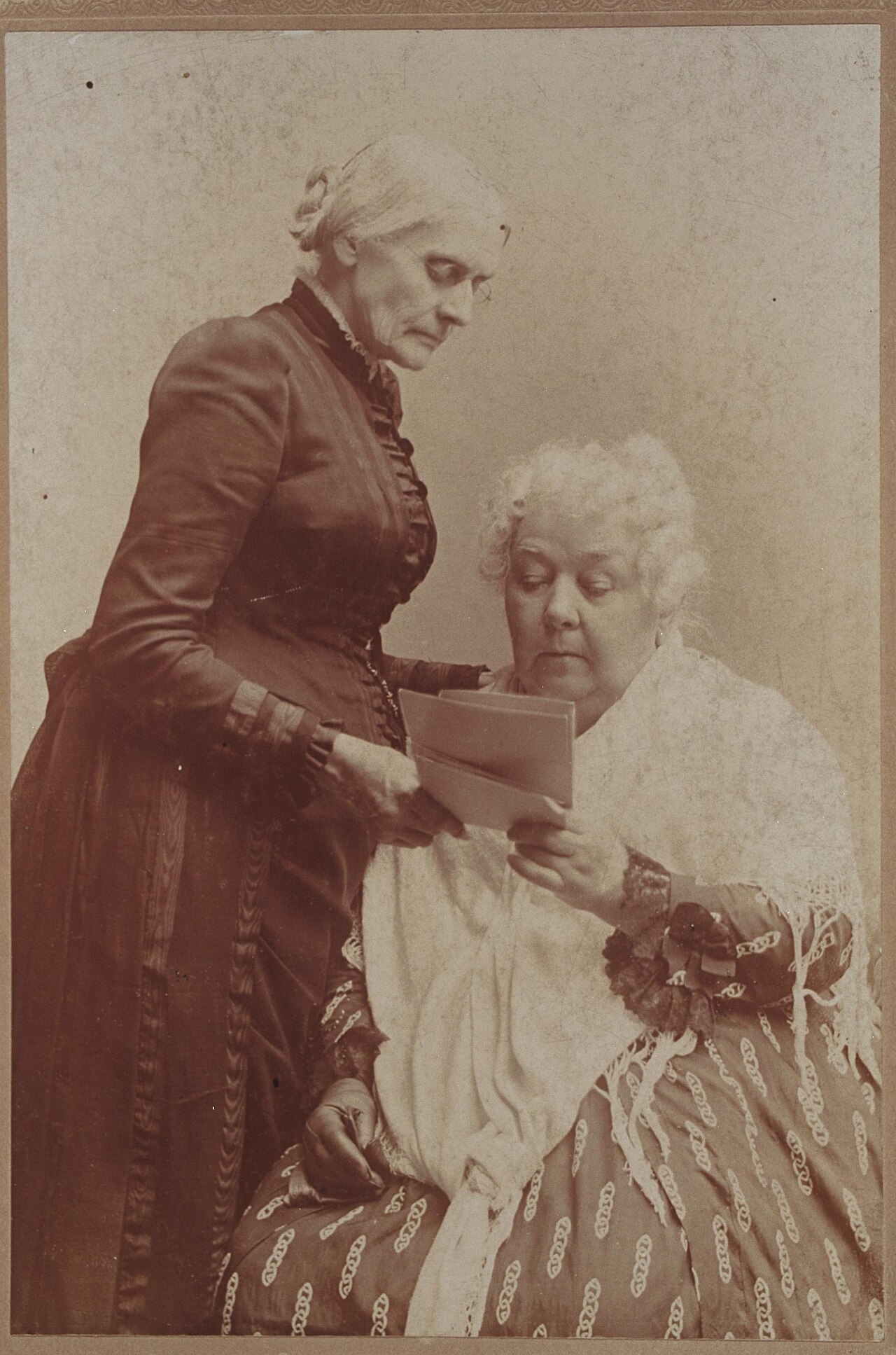
Elizabeth Cady was born into the leading family of Johnstown, New York. Her conservative father, Daniel Cady, was one of the richest landowners in the state, an attorney who served one term in the U.S. Congress and became a justice in the New York Supreme Court. Her mother, Margaret Cady (née Livingston), was more progressive, supporting the radical Garrisonian wing of the abolitionist movement and signing a petition for women's suffrage in 1867. Elizabeth was the seventh of eleven children, six of whom died before reaching full adulthood. She received a better education than most women of her era, attending Johnstown Academy until age 15, the only girl in its advanced classes in mathematics and languages, and later the Troy Female Seminary. She was made sharply aware of society's low expectations for women when Eleazar, her last surviving brother, died at age 20; her father said, 'Oh my daughter, I wish you were a boy!' In 1840 she married Henry Brewster Stanton, omitting the word 'obey' from the ceremony. In 1851 she met Susan B. Anthony and formed a decades-long partnership crucial to the women's rights movement. During the American Civil War they established the Women's Loyal National League to campaign for the abolition of slavery, and they led it in the largest petition drive in U.S. history up to that time. They started a newspaper called The Revolution in 1868 to work for women's rights.
Reader's Guide
After the Civil War, Stanton and Anthony were the main organizers of the American Equal Rights Association, which campaigned for equal rights for both African Americans and women, especially the right of suffrage. When the Fifteenth Amendment to the U.S. Constitution was introduced that would provide suffrage for black men only, they opposed it, insisting that suffrage should be extended to all African Americans and all women at the same time. Others in the movement supported the amendment, resulting in a split. During the bitter arguments that led up to the split, Stanton sometimes expressed her ideas in elitist and racially condescending language. In her opposition to the voting rights of African Americans, Stanton was quoted to have said, 'It becomes a serious question whether we had better stand aside and let "Sambo" walk into the kingdom first.' Frederick Douglass, an abolitionist friend who had escaped from slavery, reproached her for such remarks. Stanton became the president of the National Woman Suffrage Association, which she and Anthony created to represent their wing of the movement. When the split was healed more than twenty years later, Stanton became the first president of the united organization, the National American Woman Suffrage Association. This was largely an honorary position; Stanton continued to work on a wide range of women's rights issues despite the organization's increasingly tight focus on women's right to vote. Stanton was the primary author of the first three volumes of the History of Woman Suffrage, a massive effort to record the history of the movement, focusing largely on her wing of it. She was also the primary author of The Woman's Bible, a redaction criticism of the Bible that is based on the premise that its attitude toward women reflects prejudice from a less civilized age.
Did You Know?
- Stanton was the main force behind the 1848 Seneca Falls Convention, the first convention called solely to discuss women's rights.
- She was the primary author of the Declaration of Sentiments, which included a demand for women's right to vote that generated controversy at the convention.
- In 1851 she met Susan B. Anthony and formed a decades-long partnership crucial to the women's rights movement.
- During the Civil War, Stanton and Anthony led the Women's Loyal National League in the largest petition drive in U.S. history up to that time.
- Stanton was the primary author of the first three volumes of the History of Woman Suffrage and of The Woman's Bible.
Architect of Seneca Falls
Elizabeth Cady Stanton's most defining act of public leadership came in 1848, when she served as the principal driving force behind the Seneca Falls Convention. This gathering was historically unprecedented: it was the first convention in American history convened for the singular purpose of examining women's rights. Stanton took on the task of drafting its Declaration of Sentiments, the document that would become the movement's foundational text. One of her most consequential choices was to include a demand for women's right to vote. That proposal sparked heated debate among the delegates, yet it rapidly evolved into one of the core principles around which the broader women's rights movement would organize. Beyond suffrage, Stanton's activism extended into other reform movements, and she was particularly engaged in the abolitionist cause. Her work at Seneca Falls established her as the intellectual and organizational center of a movement that would span decades.
The Stanton-Anthony Partnership
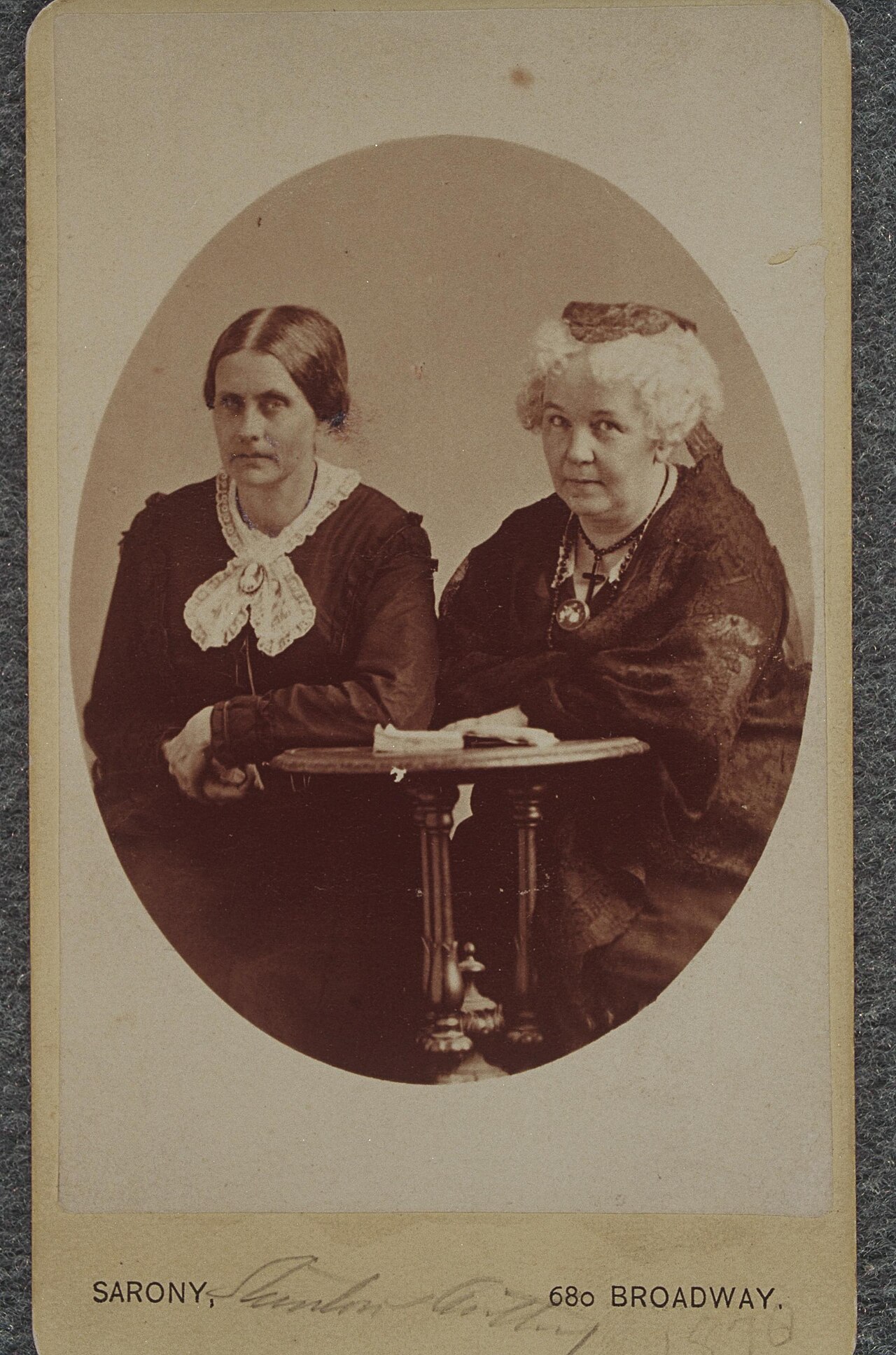
In 1851, Elizabeth Cady Stanton met Susan B. Anthony, and the two forged a collaborative bond that would prove indispensable to the trajectory of the women's rights movement. Together they navigated the turbulent years of the Civil War, founding the Women's Loyal National League to press for the abolition of slavery. Under their leadership, the league mounted what was then the largest petition drive in American history, demonstrating the political power of organized women. After the war, the pair co-organized the American Equal Rights Association, a body dedicated to securing equal rights for both African Americans and women, with particular emphasis on suffrage. In 1868 they launched The Revolution, a newspaper that served as a platform for their advocacy on a wide array of women's rights issues. Their partnership was not merely professional; it was a decades-long alliance in which both women pushed the other's thinking and amplified the movement's reach far beyond what either could have achieved alone.
The Fifteenth Amendment Fracture
The introduction of the Fifteenth Amendment, which would extend voting rights to Black men while excluding women, shattered the unity of the women's rights movement. Stanton and Anthony opposed the measure, arguing that suffrage should be granted simultaneously to all African Americans and all women rather than piecemeal. Many of their fellow activists disagreed and backed the amendment, and the resulting split divided the movement into rival factions. Stanton emerged as president of the National Woman Suffrage Association, the organization she and Anthony created to represent their side of the break. The division persisted for more than two decades before the factions reconciled, at which point Stanton was named the first president of the merged National American Woman Suffrage Association, a largely ceremonial role. During the bitter period of disagreement, Stanton's rhetoric sometimes lapsed into elitist and racially condescending language. She was quoted saying, 'It becomes a serious question whether we had better stand aside and let Sambo walk into the kingdom first.' Frederick Douglass, an abolitionist friend who had himself escaped slavery, publicly rebuked her for such remarks.
A Childhood of Privilege and Loss
Elizabeth Cady was born in 1815 into one of the most prominent families in Johnstown, New York. Her father, Daniel Cady, was among the state's wealthiest landowners, a Federalist attorney who served in the U.S. Congress and later became a justice on the New York Supreme Court. Her mother, Margaret, leaned more progressive, aligning with the radical Garrisonian abolitionists and eventually signing a women's suffrage petition. Elizabeth was the seventh of eleven children, and the family endured devastating losses: six of the eleven died before reaching adulthood, including every one of the boys. The youngest surviving brother, Eleazar, died at twenty shortly after graduating from Union College, and his father's grief-stricken remark, 'I wish you were a boy!', left a lasting mark on the ten-year-old Elizabeth. Her mother, exhausted by repeated pregnancies and bereavement, grew withdrawn, and the eldest daughter Tryphena stepped in to help raise the younger siblings. Despite this sorrow, Elizabeth received an education far ahead of what was typical for women of her era, studying Greek, mathematics, and philosophy under private tutors and attending Johnstown Academy, where she was the sole girl in the advanced classes and won second prize in a Greek competition.
Gallery
Frequently Asked Questions
Who is Elizabeth Cady Stanton?
Elizabeth Cady Stanton was an American writer and activist born in 1815 who became the central figure of the U.S. women's rights movement during the mid- to late-19th century.
What is Elizabeth Cady Stanton's role?
She spearheaded the 1848 Seneca Falls Convention—the first gathering organized exclusively around women's rights—and served as the chief author of its Declaration of Sentiments. She also co-founded the National Woman Suffrage Association to push for voting rights.
How does Elizabeth Cady Stanton's story end?
Stanton passed away on October 26, 1902, at the age of 86. Though she never lived to see the 19th Amendment ratified, her lifelong advocacy laid the groundwork that eventually secured women's suffrage in the United States.
Why is Elizabeth Cady Stanton important?
Her insistence that women deserve the right to vote sparked fierce debate even at her own convention, yet it quickly became a defining pillar of the broader suffrage movement. She also championed abolition and other social reforms alongside her women's rights work.
What is Elizabeth Cady Stanton's most famous achievement?
She is best known as the primary writer of the Declaration of Sentiments, the landmark document from the 1848 Seneca Falls Convention that articulated a full set of grievances and demands on behalf of American women.
More in Political Leaders & Revolutionaries 25-36
Elsewhere in the Political Leaders & Revolutionaries universe
Spotted an error? Know more?
This is a living reference — every entry is fact-audited, and reader corrections feed straight into our audit queue. Suggest an edit · See this site's audit record