Eduard Shevardnadze
Soviet foreign minister and Georgian president who resigned after the Rose Revolution.

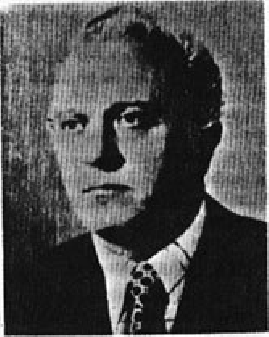
R. D. Ward · Public domain
Eduard Shevardnadze was a Soviet and Georgian politician and diplomat who governed Georgia for several non-consecutive periods from 1972 until his resignation in 2003 and also served as the final Soviet minister of foreign affairs from 1985 to 1991. Born on 25 January 1928 in Mamati, he started his political career in the late 1940s as a leading member of his local Komsomol organisation. He rose through the ranks, was demoted in 1961 after insulting a senior official, then returned to charge Tbilisi First Secretary Otari Lolashvili with corruption. His anti-corruption work led to his appointment as First Deputy of the Ministry of Internal Affairs of the Georgian SSR and later as head of the internal affairs ministry, where he charged First Secretary Vasil Mzhavanadze with corruption. He served as First Secretary of the Georgian Communist Party from 1972 to 1985, launching economic reforms that spurred growth and continuing anti-corruption campaigns.
- known_for
- Soviet Minister of Foreign Affairs under Gorbachev; President of Georgia (1995–2
Verified Timeline
Lore & Background
Shevardnadze started his political career in the late 1940s as a leading member of his local Komsomol organisation. He was later appointed its Second Secretary, then its First Secretary. His rise in the Georgian Soviet hierarchy continued until 1961, when he was demoted after insulting a senior official. After spending two years in obscurity, Shevardnadze returned as the First Secretary of a Tbilisi city district, and was able to charge the Tbilisi First Secretary at the time with corruption. His anti-corruption work quickly garnered the interest of the Soviet government and Shevardnadze was appointed as First Deputy of the Ministry of Internal Affairs of the Georgian SSR. He would later become the head of the internal affairs ministry and was able to charge First Secretary (leader of Soviet Georgia) Vasil Mzhavanadze with corruption. He served as First Secretary of the Georgian Communist Party (GPC) from 1972 to 1985, which made him the de facto leader of Georgia. As First Secretary, Shevardnadze launched several economic reforms, which would spur economic growth in the republic—an uncommon occurrence in the Soviet Union at the time when the country was experiencing nationwide economic stagnation. Shevardnadze's anti-corruption campaign continued until he resigned from his office as First Secretary of the GPC. In 1985, Mikhail Gorbachev appointed Shevardnadze to the position of Minister of Foreign Affairs. He served in the position, except for a brief interruption between 1990 and 1991, until the fall of the Soviet Union. During that time, only Gorbachev outranked Shevardnadze in importance in Soviet foreign policy. Shevardnadze was responsible for many key decisions in Soviet foreign policy during the Gorbachev era and was seen by the outside world as the face of Soviet reforms, such as Perestroika.
Reader's Guide
Shevardnadze's significance lies in his dual role as a reformist Soviet foreign minister under Gorbachev and as the post-independence leader of Georgia. As foreign minister, he was responsible for many key decisions in Soviet foreign policy and was seen as the face of Perestroika. After the Soviet collapse, he returned to Georgia at the request of the Military Council, which had recently deposed the country's first president, Zviad Gamsakhurdia. In 1992, Shevardnadze became the leader of Georgia (as Chairman of Parliament). He was formally elected as president in 1995. Under his rule, the Sochi agreement was signed, which effectively ended military hostilities in South Ossetia, although Georgia lost effective control over a large part of the territory. In August 1992, the war broke out in Abkhazia, which Georgia also lost. Shevardnadze also headed the country's government during the Georgian Civil War in 1993 against pro-Gamsakhurdia forces, which refused to recognize Shevardnadze as a legitimate leader and tried to regain power. The war ended with Shevardnadze's victory. In this regard, he signed a treaty of Georgia's accession to the Commonwealth of Independent States, in return receiving substantial assistance from Russia to end the conflict, although Georgia also deepened its ties with the European Union and the United States. Consequently, in 1999, he signed the country's accession to the Council of Europe, while in 2002, he declared his intention for Georgia to join NATO. Shevardnadze oversaw large-scale privatization and other political and economic changes. His rule was marked by rampant corruption and accusations of nepotism. Allegations of electoral fraud during the 2003 legislative election led to a series of public protests and demonstrations colloquially known as the Rose Revolution. Eventually, Shevardnadze agreed to resign. He later published his memoirs and lived in relative obscurity until he died in 2014.
Did You Know?
- Shevardnadze was demoted in 1961 after insulting a senior official, then spent two years in obscurity before returning to charge Tbilisi First Secretary Otari Lolashvili with corruption.
- Under Shevardnadze's rule, Georgia was one of several Soviet Republics that did not experience economic stagnation; by 1974, industrial output had increased by 9.6 percent and agricultural output by 18 percent.
- In 1973, Shevardnadze launched an agricultural reform in Abasha, popularly referred to as the 'Abasha experiment,' inspired by János Kádár's agricultural policy in Hungary.
- Shevardnadze was the final Soviet minister of foreign affairs, serving from 1985 to 1991 with a brief interruption between 1990 and 1991.
- He signed Georgia's accession to the Council of Europe in 1999 and declared his intention for Georgia to join NATO in 2002.
Climbing the Party Ladder and the War on Corruption
Eduard Shevardnadze entered Soviet politics in the late 1940s as a young Komsomol leader in Georgian local organizations, quickly ascending to the role of First Secretary. It was during this period that he first crossed paths with Mikhail Gorbachev. His trajectory was not without setbacks: in 1961, a clash with a senior official led the Politburo to demote him, and he spent roughly two years in political obscurity. His comeback came when he took charge of a Tbilisi city district, where he turned his attention to the incumbent First Secretary, Otari Lolashvili, pressing corruption charges that ultimately resulted in Lolashvili's imprisonment. That success propelled Shevardnadze into the Ministry of Internal Affairs, first as deputy and then as head of the ministry. There he mounted a broader anti-corruption drive that even reached the top of the Georgian hierarchy, enabling him to charge First Secretary Vasil Mzhavanadze. The Soviet leadership took notice, and in 1972 Shevardnadze was elevated to First Secretary of the Georgian Communist Party, making him the de facto ruler of the republic. In that seat he pushed economic reforms that produced rare growth amid the USSR's broader stagnation, while his anti-corruption efforts continued until his departure from the post.
The Face of Soviet Diplomacy
When Mikhail Gorbachev assumed power in 1985, he selected Shevardnadze to head the Soviet foreign ministry, a role that would define the final years of the USSR on the world stage. For the next six years, with only a brief interruption between 1990 and 1991, Shevardnadze was the second most influential figure in Soviet foreign policy, second only to Gorbachev himself. He shaped and executed many of the era's pivotal diplomatic decisions, and to observers abroad he became the visible embodiment of Perestroika and the broader reform agenda. The outside world watched him as the man who would steer the Soviet Union's foreign posture during a period of extraordinary transformation. His tenure coincided with the unraveling of the Soviet bloc, and he remained in the post until the republics' independence rendered the ministry obsolete. The combination of his long institutional knowledge of Soviet politics and his new role as the republic's foreign voice made him a singular figure: a Georgian who had governed a Soviet republic for thirteen years and then, almost overnight, become the principal architect of the superpower's international engagement.
Turbulent Return: Georgia in the 1990s
After the Soviet Union dissolved in 1991, Shevardnadze was summoned back to the newly independent Georgia by a Military Council that had just removed President Zviad Gamsakhurdia from power. He assumed leadership as Chairman of Parliament in 1992 and was formally elected president in 1995. The decade that followed was marked by devastating territorial losses and internal conflict. The Sochi agreement brought an end to armed fighting in South Ossetia, though Georgia ceded effective control over much of that territory. In August 1992, war erupted in Abkhazia, another conflict Georgia ultimately lost. Domestically, the 1993 Georgian Civil War pitted Shevardnadze's government against pro-Gamsakhurdia forces who rejected his legitimacy; the conflict ended in his victory. To secure Russian military assistance, he signed Georgia's accession to the Commonwealth of Independent States, yet he simultaneously deepened the country's relationships with the European Union and the United States. By 1999 he had brought Georgia into the Council of Europe, and in 2002 he publicly declared the nation's intention to join NATO. His government oversaw sweeping privatization and structural economic change, though his tenure was also dogged by widespread corruption and accusations of nepotism.
The Rose Revolution and Final Years
The end of Shevardnadze's political career came in 2003, when allegations of electoral fraud surrounding the legislative elections ignited mass street protests in Tbilisi. The demonstrations, which became known colloquially as the Rose Revolution, forced the president to the negotiating table, and he ultimately agreed to step down. After leaving office, Shevardnadze retreated from public life. He devoted himself to publishing his memoirs, offering his own account of decades spanning the Soviet hierarchy, the Gorbachev era, and the turbulent birth of independent Georgia. He lived in relative obscurity for the remaining years of his life, far removed from the corridors of power he had dominated for so long. Eduard Shevardnadze died on 7 July 2014, at the age of eighty-six. His legacy remains deeply contested: to some he was a reformist who modernized Georgian governance and navigated the country through existential territorial wars, while to others his later years were defined by the very corruption and patronage networks he had once vowed to dismantle.
Gallery
Frequently Asked Questions
Who is Eduard Shevardnadze?
Eduard Shevardnadze was a Georgian and Soviet statesman born on 25 January 1928 who served as the last foreign minister of the USSR and later as a long-time leader of independent Georgia. He died on 7 July 2014.
What role did Shevardnadze play in Soviet foreign policy?
From 1985 to 1991 he headed the Soviet foreign ministry under Gorbachev, steering the USSR's diplomatic posture during the final stretch of the Cold War. He was a central architect of the era's engagement with Western governments.
How did Shevardnadze's time leading Georgia end?
His resignation came in 2003 after the Rose Revolution, a mass protest movement that compelled him to step down. His political career in Georgia had stretched across several non-consecutive stints from 1972 onward.
Why is Shevardnadze significant in both Soviet and Georgian history?
He uniquely bridges two eras: the closing years of the Soviet Union and the turbulent post-Soviet period in which Georgia faced civil war and economic restructuring. Few figures shaped both the USSR's final diplomatic decisions and the early identity of independent Georgia.
What fields and nationalities are associated with Shevardnadze?
His work spanned politics and diplomacy, and he held both Soviet and Georgian nationality over the course of his career. He is most commonly remembered as the final Soviet foreign minister and the Georgian leader who resigned during the Rose Revolution.
More in Political Leaders & Revolutionaries 25-36
Elsewhere in the Political Leaders & Revolutionaries universe
Spotted an error? Know more?
This is a living reference — every entry is fact-audited, and reader corrections feed straight into our audit queue. Suggest an edit · See this site's audit record