
Eleanor Roosevelt
First lady, UN delegate, and human rights advocate.

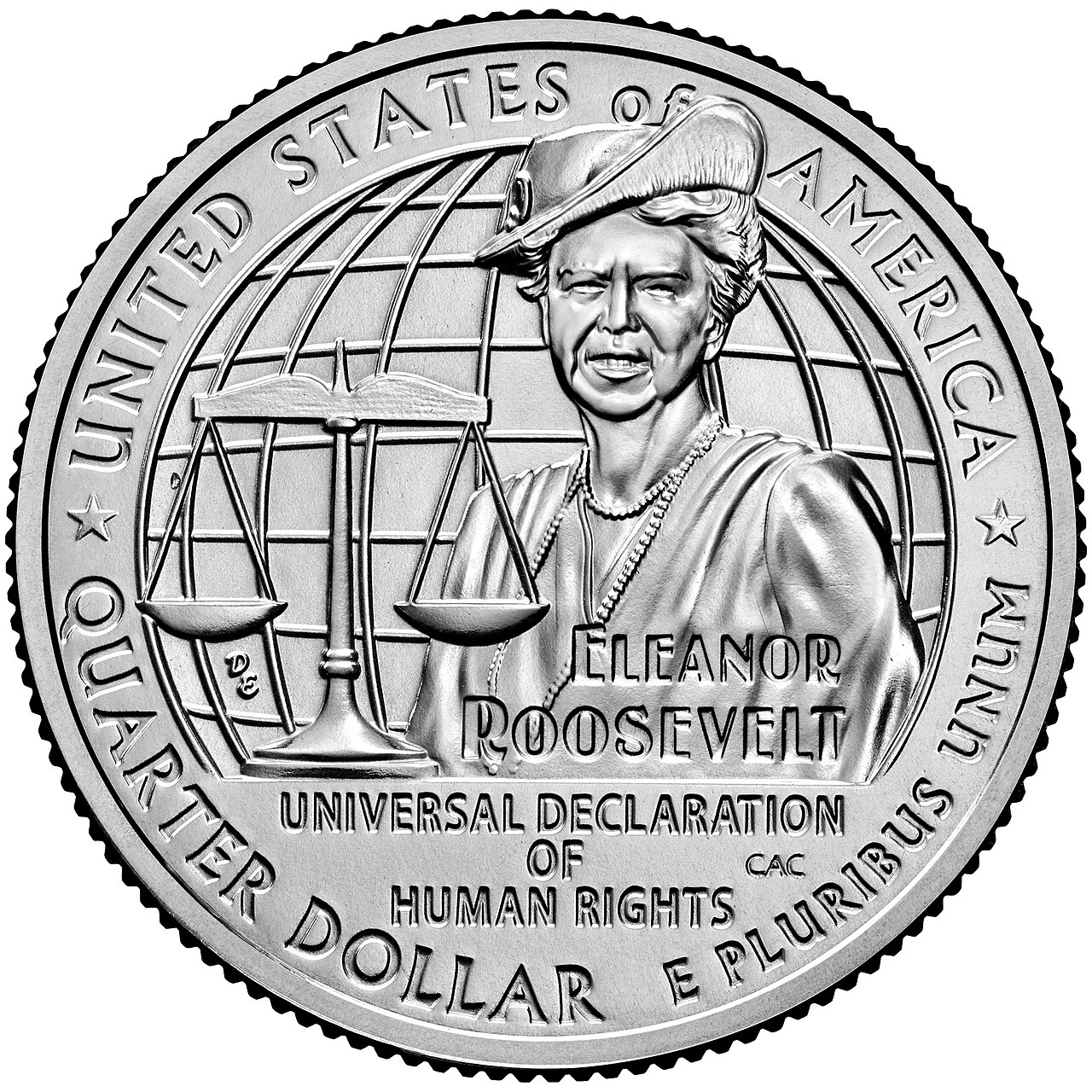
Don Everhart, Craig Campbell · Public domain
Eleanor Roosevelt National Historic Site was established by the U.S. Congress to commemorate the life and accomplishments of Eleanor Roosevelt. Once part of the larger Roosevelt family estate in Hyde Park, New York, today the property includes the 181 acres (73 ha), buildings and other historic features that Eleanor Roosevelt called Val-Kill. It is located approximately two miles east of Springwood, the Franklin D. Roosevelt home. It is a few hundred feet east of New York State Route 9G, along which runs the Dutchess County bus route C to Tivoli. Eleanor Roosevelt created and shared Val-Kill with her friends Nancy Cook and Marion Dickerman. At Val-Kill, they established Val-Kill Industries to employ local farming families in handcraft traditions. The Roosevelts frequently used Val-Kill's relaxed setting for entertaining family, friends, political associates, and world leaders. Nancy and Marion sold their interest in the property to Eleanor and moved to Connecticut shortly after the death of President Franklin D. Roosevelt in 1945. Val-Kill then became Eleanor Roosevelt's primary residence and the place most associated with her. After her death, Val-Kill was converted into rental units and later sold to developers. A public campaign ensued to save Val-Kill and it was declared a National Historic Site in 1977. It is now managed by the National Park Service.
- died
- November 7, 1962
- field
- Political figure, diplomat, activist
- nationality
- American
- known_for
- Longest-serving first lady; UN delegate; chair of the UN Commission on Human Rig
Verified Timeline
Lore & Background
Franklin encouraged Eleanor Roosevelt to develop this property as a place that she could promote some of her ideas for work with winter jobs for rural workers and women. She named the spot Val-Kill, loosely translated as waterfall-stream from the Dutch language common to the original European settlers of the area. There are two buildings which are adjacent to Fallkill Creek. Stone Cottage, the original cottage which was home to Marion Dickerman and Nancy Cook, which they sold back to Eleanor in 1947 and a large two-story stuccoed building that housed Val-Kill Industries and which would become Eleanor's home after Franklin's death. It was the only residence that she personally owned. Eleanor Roosevelt often hosted workshops for Encampment for Citizenship here. The larger house was converted into four rental units after Eleanor's death in 1962, and in 1970 the land was purchased by a private company for development purposes. Public reaction to this sale developed into a preservation campaign and the possibility of making the site a national memorial. In May 1977, Val-Kill was designated the Eleanor Roosevelt National Historic Site by an Act of Congress, 'to commemorate for the education, inspiration, and benefit of present and future generations the life and work of an outstanding woman in American history.'
Reader's Guide
In 1984 the Eleanor Roosevelt Center at Val-Kill negotiated an agreement with the National Park Service and made Stone Cottage its home. In 2008 the Eleanor Roosevelt Center moved from Stone Cottage to a new facility at Val-Kill. In 1998, Save America's Treasures (SAT) announced Val-Kill Cottage as a new official project. SAT's involvement led to the Honoring Eleanor Roosevelt (HER) project, initially run by private volunteers and now a part of SAT. The HER project has since raised almost $1 million, which has gone toward restoration and development efforts at Val-Kill and the production of Eleanor Roosevelt: Close to Home, a documentary about Roosevelt at Val-Kill. Due in part to the success of these programs, Val-Kill was given a $75,000 grant and named one of 12 sites showcased in Restore America: A Salute to Preservation, a partnership between SAT, the National Trust and HGTV. The site is managed by the National Park Service in conjunction with the adjacent Home of Franklin D. Roosevelt National Historic Site and nearby Vanderbilt Mansion National Historic Site. The NPS continues to partner with SAT and the Eleanor Roosevelt Center at Val-Kill in the management of the Eleanor Roosevelt National Historic Site.
Did You Know?
- Eleanor Roosevelt named Val-Kill, loosely translated as 'waterfall-stream' from the Dutch language common to the original European settlers of the area.
- Val-Kill was the only residence that Eleanor Roosevelt personally owned.
- After Eleanor's death in 1962, the larger house was converted into four rental units.
- In May 1977, Val-Kill was designated the Eleanor Roosevelt National Historic Site by an Act of Congress.
- The HER project has raised almost $1 million for restoration and development efforts at Val-Kill.
Origins and Vision at the Creek's Edge
Franklin Roosevelt nudged his wife toward a bold experiment on a stretch of land beside Fallkill Creek in Hyde Park, New York. What began as a shared project with friends Nancy Cook and Marion Dickerman grew into a living laboratory for social reform. Eleanor envisioned a place where local farming families could earn a living through handcraft traditions, and so Val-Kill Industries took shape within a large two-story stuccoed building. The name itself, loosely meaning waterfall-stream, echoed the Dutch linguistic heritage of the region's earliest European settlers. The property sat roughly two miles east of the family's main estate, Springwood, and a few hundred feet from New York State Route 9G, where a Dutchess County bus line ran toward Tivoli. More than a retreat, Val-Kill was a working space where Eleanor could test ideas about seasonal employment for rural workers and women, turning a quiet creek-side parcel into a nexus of economic opportunity and political conversation.
A Home, a Gathering Place, a Life of Her Own
After Franklin's death in 1945, Nancy Cook and Marion Dickerman sold their shares in the property and relocated to Connecticut, leaving Eleanor with full ownership of Val-Kill. The larger stuccoed building, which had housed the Industries workshop, became her primary residence and the only home she ever personally owned. Stone Cottage, the smaller structure that had been the friends' dwelling, remained adjacent to the creek. In this relaxed creek-side setting, Eleanor entertained a wide circle: family members, close friends, political allies, and even world leaders who passed through Hyde Park. She also used the grounds to host workshops for the Encampment for Citizenship, a program that brought civic education to broader audiences. The 181-acre property, with its buildings and historic features, became the physical embodiment of her later life. It was here, away from the formal pressures of Washington, that she most fully inhabited the role of independent public figure rather than the wife of a sitting president.
Threat and Triumph of Preservation
Eleanor died in 1962, and within a few years the larger house at Val-Kill was subdivided into four rental units. By 1970, a private company had purchased the land with plans to develop it commercially. The prospect of construction rolling up Route 9G galvanized a public preservation campaign that grew rapidly in intensity. Advocates pushed for federal recognition, arguing that the site deserved protection as a national memorial to a woman whose life shaped the country. Their efforts culminated in May 1977, when an Act of Congress formally designated the property the Eleanor Roosevelt National Historic Site. The congressional language made clear the purpose: the site existed to educate, inspire, and serve generations yet to come by preserving the story of a woman who left an indelible mark on American history. The 181-acre parcel, its buildings, and its historic features were thus removed from the private market and placed under the stewardship of the National Park Service, ensuring that Val-Kill would remain a public trust rather than a developer's blueprint.
A Living Legacy Under Shared Stewardship
Since its designation, Val-Kill has remained an active site of education and interpretation. In 1984, the Eleanor Roosevelt Center at Val-Kill struck a partnership agreement with the National Park Service and made Stone Cottage its headquarters. A new facility opened on the property in 2008, expanding the Center's capacity. Meanwhile, the Save America's Treasures program named Val-Kill Cottage an official project in 1998, spawning the Honoring Eleanor Roosevelt initiative. That volunteer-driven effort has raised nearly one million dollars toward restoration and has also funded the documentary Eleanor Roosevelt: Close to Home. The site's profile grew further when it received a 75,000-dollar grant and was selected as one of twelve locations featured in Restore America: A Salute to Preservation, a collaboration involving Save America's Treasures, the National Trust, and HGTV. Today the National Park Service manages the historic site in coordination with the adjacent Home of Franklin D. Roosevelt and the nearby Vanderbilt Mansion, while continuing to partner with both Save America's Treasures and the Eleanor Roosevelt Center to keep Val-Kill vibrant and accessible.
Gallery
Frequently Asked Questions
Who is Eleanor Roosevelt?
Anna Eleanor Roosevelt (1884–1962) was an American political figure, diplomat, and activist who redefined the role of First Lady and later became a leading voice in international human rights. She is widely regarded as one of the most influential women in U.S. political history.
What was Eleanor Roosevelt's role as First Lady?
She served as the longest-serving First Lady in American history, holding the position across Franklin D. Roosevelt's four terms from 1933 to 1945. Instead of limiting herself to social duties, she used the platform for extensive travel, public speaking, and direct advocacy on housing, labor, and civil-rights issues.
What did Eleanor Roosevelt do at the United Nations?
After her husband's death in 1945, she was appointed a U.S. delegate to the UN General Assembly and went on to chair the UN Commission on Human Rights. She took a leading role in drafting the text of the Universal Declaration of Human Rights and in securing broad international backing for it.
How does Eleanor Roosevelt's story end?
Eleanor Roosevelt died on November 7, 1962, at the age of 78. Her legacy persists through the human-rights framework she helped build and the precedent she set for women in public political life.
Why is Eleanor Roosevelt important?
She transformed the First Lady position from a largely ceremonial role into one of active policy engagement and public advocacy. Her central contribution to the Universal Declaration of Human Rights cemented her place as a defining figure in the post-war establishment of global human-rights standards.
More in Political Leaders & Revolutionaries 25-36
Elsewhere in the Political Leaders & Revolutionaries universe
Spotted an error? Know more?
This is a living reference — every entry is fact-audited, and reader corrections feed straight into our audit queue. Suggest an edit · See this site's audit record