
Ellen Johnson Sirleaf
First elected female head of state in Africa.

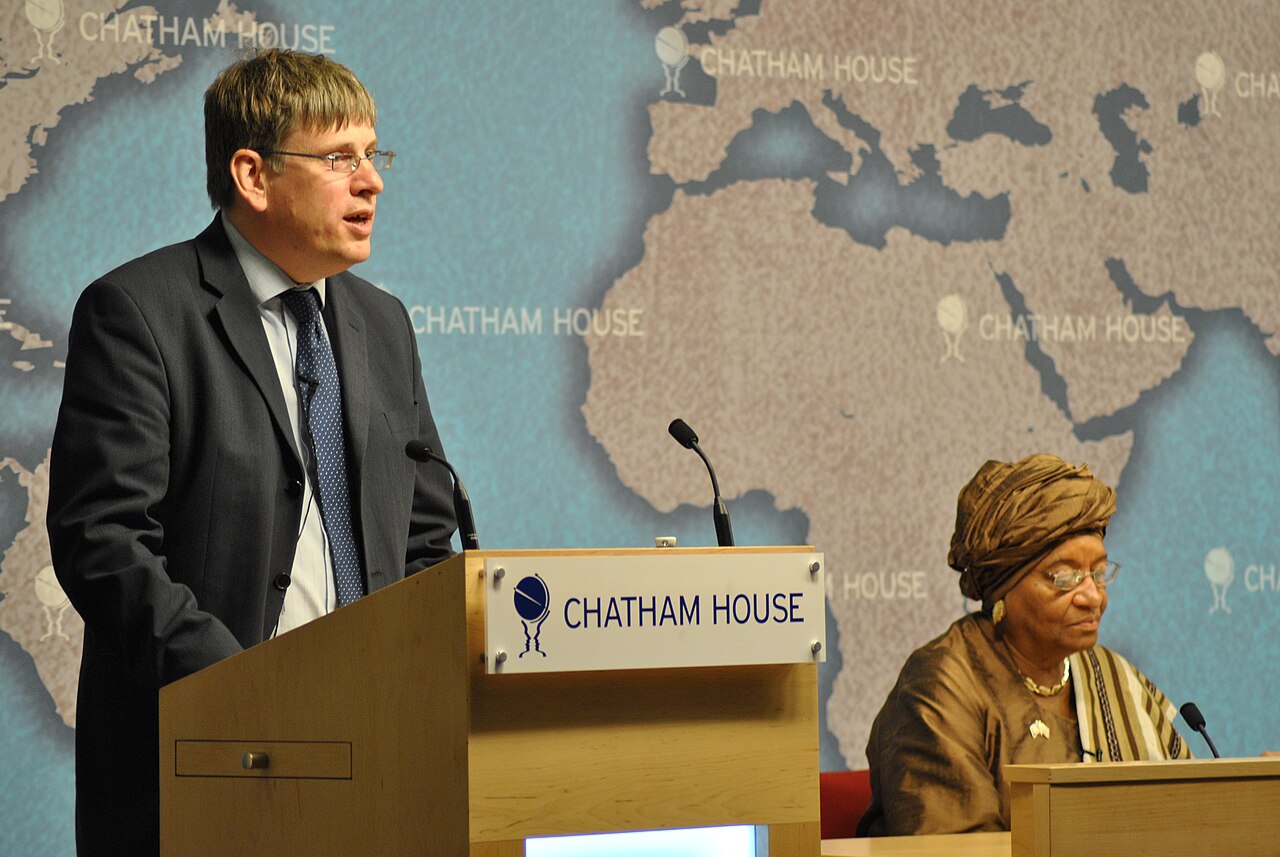
Chatham House · CC BY 2.0
Ellen Johnson Sirleaf was elected President of Liberia in November 2005, serving during the first mandate of her presidency while the Liberian Truth and Reconciliation Commission (TRC) worked. The TRC's final report, released on 1 July 2009, placed Sirleaf on a list of persons that should be barred from public office for thirty years for being associated with former warring factions. On 26 July, Sirleaf apologized to Liberia for supporting Charles Taylor, stating that 'when the true nature of Mr. Taylor's intentions became known, there was no more impassioned critic or strong opponent to him in a democratic process' than she. The Liberian Supreme Court later overturned the TRC's ruling barring her from public office.
- field
- Politics, Economics
- nationality
- Liberian
- known_for
- First elected female head of state in Africa
Verified Timeline
Lore & Background
Ellen Johnson Sirleaf was elected President of Liberia in November 2005, becoming the first elected female head of state in Africa. During her first mandate, the Liberian Truth and Reconciliation Commission (TRC) operated, having been created in May 2005 under the Transitional Government. The TRC's final report, released on 1 July 2009, included Sirleaf on a list of persons recommended to be 'specifically barred from holding public offices; elected or appointed for a period of thirty (30) years' for 'being associated with former warring factions.' On 26 July, Sirleaf apologized to Liberia for supporting Charles Taylor, adding that 'when the true nature of Mr. Taylor's intentions became known, there was no more impassioned critic or strong opponent to him in a democratic process' than she. On 28 August, Liberia's parliament announced they must 'consult our constituents for about a year' before deciding whether to implement the Commission's recommendations. The Liberian Supreme Court later overturned the TRC's ruling on barring individuals from public office in the case Williams v. Tah, stating the recommendation was an unconstitutional violation of procedural due process.
Reader's Guide
Ellen Johnson Sirleaf's significance is tied to her role as Liberia's president during the TRC process. The TRC was a Parliament-enacted organization created in May 2005 under the Transitional Government, and it worked throughout her first mandate after she was elected in November 2005. The TRC's final report recommended that Sirleaf be barred from public office for thirty years, a ruling later overturned by the Liberian Supreme Court. Sirleaf publicly apologized for supporting Charles Taylor, saying that once his true intentions became known, she became his strongest opponent. The TRC's impact locally was minimal; in January 2011, the Supreme Court ruled in Williams v. Tah that the TRC's recommendation on barring individuals from office was unconstitutional. The TRC's other recommendations have not been followed, lowering its local impact to essentially none. Only 39% of Liberians believed the TRC actually helped promote peace and unity in Liberia.
Did You Know?
- Ellen Johnson Sirleaf was elected President of Liberia in November 2005, becoming the first elected female head of state in Africa.
- The Liberian Truth and Reconciliation Commission's final report recommended that Sirleaf be barred from public office for thirty years for being associated with former warring factions.
- On 26 July, Sirleaf apologized to Liberia for supporting Charles Taylor, stating that once his true intentions became known, she became his most impassioned critic and strong opponent.
- The Liberian Supreme Court overturned the TRC's ruling barring Sirleaf from public office, stating it was an unconstitutional violation of procedural due process.
- Only 39% of Liberians believed the TRC actually helped promote peace and unity in Liberia.
Gallery
Frequently Asked Questions
Who is Ellen Johnson Sirleaf?
She is a Liberian political figure who served as the 24th president of Liberia from 2006 to 2018, becoming the first woman ever elected to lead a nation in Africa.
What makes her election historic in African politics?
Her 2005 victory marked the first time any woman on the African continent was elected as head of state, a milestone no other African country had reached at that point.
Why did she receive the Nobel Peace Prize in 2011?
The committee recognized her sustained work in drawing women into peacekeeping and conflict-resolution efforts, and she shared the award with fellow activists Leymah Gbowee and Tawakkul Karman.
What was her professional background before entering politics?
She built a long career in economics and international finance, including stints at the World Bank and the United Nations, before turning her full attention to Liberian governance.
How did her presidency conclude?
After serving two full terms spanning twelve years, she stepped down in January 2018, having guided Liberia through a period of post-war reconstruction and institutional rebuilding.
More in Political Leaders & Revolutionaries 25-36
Elsewhere in the Political Leaders & Revolutionaries universe
Spotted an error? Know more?
This is a living reference — every entry is fact-audited, and reader corrections feed straight into our audit queue. Suggest an edit · See this site's audit record